

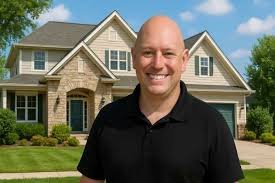
A mortgage for a new construction home comes in two forms, and which one you need depends on who is doing the building. If you buy a home from a builder, you usually get a regular mortgage that funds at closing once the house is finished. If you build on your own lot with a general contractor, you need a construction loan that pays out in stages and then converts to a permanent mortgage. This guide from Duane Buziak, independent Virginia mortgage broker, explains each path, what lenders look at, how draws and rate locks work, and how to pick the structure that fits your build anywhere from Richmond to Northern Virginia to Hampton Roads.
Two Ways to Finance New Construction: Builder Purchase vs. Building Your Own
Many buyers assume every new build needs a construction loan. It does not. The difference comes down to who owns the project while it is under construction.
When you buy a to-be-built or spec (speculative) home from a production builder, the builder owns the land and carries the construction. You sign a purchase contract, and the builder finances the build with its own capital. You close on a standard mortgage, conventional, FHA, VA, or USDA, when the home is complete and the county has issued a certificate of occupancy. Your lender underwrites a finished house, so the process looks much like buying any other home.
When you build on your own lot with a general contractor, you are the owner-developer. No finished house exists to secure the loan, so the lender releases money in stages as work is completed. That requires interim construction financing, which has its own approval steps for you, your builder, and your plans.
A quick way to see which side you are on:
- Construction risk: With a builder purchase, the builder carries it until closing. With your own build, you carry it, including delays and cost overruns.
- When principal and interest start: With a builder purchase, usually at closing on the finished home. With your own build, you typically make interest-only payments on funds drawn during construction, then principal and interest after conversion.
- Number of closings: A builder purchase has one. Your own build has one or two, depending on the loan structure covered in the next section.
- Who picks the plans and lot: The builder decides in a builder purchase. You decide in your own build, which also means the lender must approve them.
One caution on builder purchases: a builder who needs your loan to close in six or nine months may still ask for a deposit and a rate-lock plan well before the house is done. That timing issue is covered in the rate lock section below.
Construction-to-Permanent vs. Two-Close Loans
If you are building on your own lot, the loan comes in two main structures. Both fund the build in stages. They differ in how many times you close and when the permanent rate gets set.
One-time close (construction-to-permanent)
You apply once, close once, and the loan converts to a permanent mortgage when construction ends. During the build you pay interest only on the amount drawn. The key question to ask any lender is when does my permanent rate lock? Some programs lock the rate at the initial closing. Others lock only near completion, which leaves you exposed to market moves. Do not assume; get the answer in writing.
Two-time close
You take a short-term construction loan first, then apply for a separate mortgage when the home is finished. You can shop for the permanent loan later, which helps if rates fall. The tradeoffs are two sets of closing costs and requalification risk: if your income, job, or credit changes during the build, you must still qualify the second time.
Here is how the two compare:
- Closings: One-time close has one. Two-time close has two.
- Closing costs: One-time close pays them once. Two-time close pays them twice, on the construction loan and again on the mortgage.
- Rate certainty: One-time close often offers more, depending on when the lock happens. Two-time close sets the permanent rate only when you apply for the second loan.
- Requalification: One-time close generally does not require it at conversion. Two-time close does.
- Best fit: One-time close suits buyers who want predictability and a stable financial picture. Two-time close suits buyers who expect rates to drop, want flexibility, or whose lender mix requires separate products.
Terms differ by lender, so treat that comparison as the general pattern rather than a rule.
Renovation loans are a different product
A renovation loan finances repairs or improvements to an existing house. A construction loan finances a new structure from the ground up. They use similar draw concepts, but the underwriting, appraisal, and program rules are different, so do not mix them up when you compare lenders.
How the Construction Draw Process Works
The draw process is the heart of construction financing. The lender does not hand you the full loan amount at closing. It releases money in installments tied to progress.
- Approval of the builder and plans. The lender reviews your contractor’s license, insurance, and references, plus the plans, specifications, and budget. An appraisal is based on those plans and the projected finished value.
- Closing and initial funding. Depending on the structure, you close and the lender may fund land costs or an initial draw.
- Milestone draws. As work reaches stages such as foundation, framing, and rough-in of plumbing, electrical, and mechanical systems, the builder requests a draw. An inspector verifies the work, and the lender releases funds, often to the builder directly.
- Final draw and completion. After final inspection and the certificate of occupancy, the last funds are released and the loan converts or you move to your permanent mortgage.
Interest accrues only on money actually drawn. Your early payments are small and climb as the balance grows. Plan for that rise instead of budgeting from the first month’s bill.
Land and the down payment
If you own your lot free and clear, many lenders let the equity count toward the down payment, though how they value it varies. If you do not own the land yet, the lot purchase can often be rolled into the construction loan. Rules on how much land equity counts, seasoning of the lot, and loan-to-value limits are lender-specific, so confirm them before you buy a parcel.
Timelines and contingency
A typical single-family build often runs somewhere between several months and a year or more, depending on size, weather, permitting, and material availability. Longer builds are common for custom homes in places like the Northern Neck, Lake Anna, or Smith Mountain Lake, where site work can be complex. Budget a contingency reserve for overruns and change orders. Many builders and lenders suggest a cushion, commonly around five to ten percent of the build cost, but ask your own lender and builder what they expect. Upgrades you add mid-build usually come out of your pocket, not the loan.
Qualifying: Credit, Down Payment, and Program Rules for New Builds
Construction loans usually carry stricter credit and down payment standards than a standard purchase, because the lender is funding something that does not exist yet. Minimum scores and down payments vary by lender and change often. Verify current minimums as of 2026 before you commit to a plan, and expect the lender to ask for more documentation, including contracts, plans, a budget, and sometimes reserves.
Which programs can finance new construction
- FHA loans: one-time close construction-to-permanent options exist, with the usual FHA mortgage insurance and property standards.
- VA loans: eligible veterans and service members can use one-time close construction financing where a lender offers it. Duane Buziak also works with VA borrowers down to a 500 FICO on certain scenarios, though construction overlays can be tighter.
- USDA loans: new builds can qualify in eligible rural and some suburban areas, subject to income and property-location rules.
- Conventional loans: the most flexible option for both builder purchases and construction-to-permanent loans.
- Jumbo loans: for larger builds that exceed the conforming loan limit for your county. Check the FHFA 2026 limits, which are higher in Northern Virginia than in most of the state.
FHA and VA builder requirements
New homes financed with FHA or VA must meet program standards, which generally involve proper inspections and warranty or completion documentation from the builder. HUD and VA update these requirements, so check current guidance with your lender and the agencies themselves before relying on a specific rule.
Compare paths without a credit hit
Duane Buziak can review your options with a soft credit pull mortgage pre-qualification through the NoTouch Credit Pull, meaning no hard inquiry pre-approval. That lets you compare builder and lender paths without credit damage. A mortgage pre-approval without hard pull is especially useful when you are collecting quotes from a builder’s lender, a bank, and a broker at the same time, because you avoid stacking inquiries while you decide.
Rate Locks, Builder Incentives, and Costs to Plan For
The long-build rate lock problem
Standard rate locks typically run 30 to 60 days. A new build can take far longer. If you are buying from a builder with a closing date eight months away, you cannot simply lock today and forget it. Ask about extended locks, which cost more, and float-down options, which let you capture a lower rate if the market improves, usually for a fee. Compare the cost of the lock against the risk of rates moving. Current rates change daily, so treat any quoted figure as accurate only as of the date you receive it.
Builder incentives
Builders often advertise closing cost credits or rate buydowns, and these frequently require you to use the builder’s preferred lender. That can be a good deal, but not always. To compare:
- Get the builder lender’s Loan Estimate and a second one from an independent broker for the same loan type and loan amount.
- Compare the interest rate, the APR, and total lender fees, not just the incentive headline.
- Ask whether the credit is applied only if you use their lender, and whether the home price was raised to fund it.
- Check how long the buydown lasts and what your payment becomes after it ends.
A larger credit attached to a higher rate can cost more over the life of the loan than a smaller credit with a lower rate. Duane Buziak will run your numbers side by side, and his Dare to Compare approach invites you to bring any competing quote. In many cases, the right structure leaves you with little to nothing out of pocket at closing, so ask about no-out-of-pocket closing options.
Costs people forget
- Land purchase and site work, including clearing, grading, well, septic, and driveway
- Permits and impact or utility connection fees, which vary by county and locality
- An appraisal based on plans and specs, plus draw inspection fees
- Builder’s risk insurance during construction
- Landscaping, window treatments, and appliances not included in the contract
Virginia demand
New-build activity is strong in Northern Virginia, the Richmond suburbs such as Short Pump, Glen Allen, and Hanover, Fredericksburg, and parts of Hampton Roads. For current permit and pricing figures, consult a named source such as the U.S. Census Bureau’s new residential construction data or the Virginia REALTORS market reports, rather than relying on rough estimates.
Why a Broker With 500+ Lenders Helps With New Construction
Construction products vary widely among lenders. Some offer true one-time close loans with a lock at application; others only offer two-time close. Some limit the land equity they count, require higher reserves, or restrict the builders they accept. A single bank has one shelf. Builder in-house lenders, and large online lenders, each have their own narrow menu.
As an independent broker, Duane Buziak is not paid to push one institution’s products. He can search 500+ wholesale lenders for the best fit on terms, lock options, and fees, and wholesale pricing often runs below retail at the same institution.
The credentials behind that search are specific and checkable:
- Duane Buziak, NMLS #1110647, Coast2Coast Mortgage LLC NMLS #376205
- Virginia Broker of the Year 2024 and 2025
- Scotsman Guide Top Originator 2025 (#114 nationally, $44.4M) and 2026 ($51.2M)
- UWM PRO ELITE 2025
- 1,400+ five-star reviews
- Licensed in VA, FL, TN, and GA
Before you sign with a builder or lender, ask these questions:
- Is this a one-time or two-time close, and when exactly does my permanent rate lock?
- What does an extended lock or float-down cost?
- Which builders and plans does the lender approve, and how are draws inspected and paid?
- What happens if the build runs late or costs rise?
- Is the builder incentive tied to the preferred lender, and what is the rate and total cost without it?
Frequently Asked Questions About New Construction Mortgages
Can I use an FHA or VA loan to build a home?
Often yes, through one-time close construction-to-permanent options, though not every lender offers them and the property and builder must meet program standards. See the FHA and VA pages for the basics, then confirm the details for your build.
Do I have to use the builder’s lender?
No. A builder may offer incentives for using its preferred lender, but you are not required to, and you can compare the offer against an independent quote before deciding.
How much down payment do I need for a new construction mortgage?
It depends on the program and lender. Builder purchases follow regular program minimums, while construction loans often require more. Verify current requirements as of 2026 for your scenario.
Will I make mortgage payments while the home is being built?
With a builder purchase, usually not until closing. With a construction loan, you typically pay interest only on the funds drawn, and that amount grows as the build progresses. You may also still be paying rent or a current mortgage.
Can I check my options without a hard credit inquiry?
Yes. Duane Buziak offers a no hard inquiry mortgage pre approval path through a soft pull mortgage broker process, so your no credit hit mortgage application stage does not affect your score.
Choosing Your Loan Before You Choose Your Builder
The right loan depends on one question: are you buying a finished home from a builder, or building your own? Answer that first, then settle the structure, the lock timing, and the incentive math before you sign any contract.
Start with the NoTouch Credit Pull soft pull pre-qualification from Virginia Mortgage Broker by Duane Buziak, so you can compare new construction options before committing to a builder or lender. Ready to see what Virginia’s top-ranked mortgage broker can do for you? Duane Buziak offers a no-hard-pull pre-approval so you can explore your options with zero credit impact. With access to 500+ wholesale lenders, you get better rates than any single bank can offer. Get your free mortgage review today.