


If your tax returns show far less than you actually earn, the lender you pick matters as much as your income does. Self-employed Virginia buyers, from Richmond freelancers to Northern Virginia contractors, often get declined by one underwriter and approved by another on the same file. The six lenders and loan channels below are compared on how they treat self-employed income: documentation flexibility, non-QM access, program range, and whether you can check eligibility before a hard credit pull. Duane Buziak, an independent mortgage broker, wrote this from the files he sees every week.
Quick Comparison of Lenders for Self-Employed Borrowers
- Duane Buziak at Virginia Mortgage Broker: best for self-employed Virginia borrowers whose tax returns understate real income; quote-based; shops 500+ wholesale lenders and offers bank statement and DSCR non-QM paths with a soft pull start.
- Rocket: best for borrowers with clean, consistent two-year returns who want a fully online process; see website for pricing; the most streamlined end-to-end digital experience on this list.
- Movement: best for buyers who want a national lender with a personal loan officer; see website for pricing; homebuyer-focused programs paired with dedicated loan officers.
- NFM Lending: best for borrowers who want local, branch-level guidance; see website for pricing; branch loan officers who review income by hand.
- Alcova Mortgage: best for borrowers who want a regional lender familiar with Virginia; see website for pricing; a Southeast and Virginia market focus.
- Veterans United Home Loans: best for self-employed veterans and service members; see website for pricing; deep specialization in the VA loan process.
1. Duane Buziak at Virginia Mortgage Broker
Duane Buziak at Virginia Mortgage Broker is an independent brokerage (Duane Buziak, NMLS #1110647; Coast2Coast Mortgage LLC, NMLS #376205) built for borrowers whose files do not fit a single bank’s template. Because self-employed approval depends so heavily on which guidelines read your income, Duane shops the scenario across 500+ wholesale lenders instead of running it through one shelf. That is the main reason it sits first on this list, and it is also the company’s own product, so weigh it with that in mind.

The practical difference shows up in how income gets counted. A full-documentation lender averages the net profit on your last two years of returns, after write-offs. If depreciation, home office, vehicle, and other deductions pull that number down, a bank statement or DSCR loan may qualify you on deposits or property cash flow instead. A broker can compare both routes on the same day and show you the trade-off in rate and cost.
- Access to 500+ wholesale lenders, so your income documentation is matched to guidelines that suit it rather than forced into one lender’s rules.
- Conventional, FHA, VA, USDA, jumbo, and refinance programs, so you can compare full-documentation options against non-QM on one file.
- Bank statement loans, which use business or personal deposits instead of tax returns to calculate income.
- DSCR loans for investors, which qualify on a rental property’s cash flow rather than your personal income.
- A soft credit pull mortgage pre-qualification (NoTouch Credit Pull), so you see where you stand with no credit hit mortgage application and no score impact.
On setup, you upload documents through a secure online process (confirm the current portal details when you apply). Duane works the file personally, which means one point of contact rather than a handoff between departments. His record is verifiable: Scotsman Guide Top Originator in 2025 (#114 nationally, $44.4M) and 2026 ($51.2M), VA Broker of the Year in 2024 and 2025, UWM PRO ELITE 2025, and 1,400+ five-star reviews.
The limits are real. A broker does not fund loans in-house, so your loan closes with a wholesale lender, and non-QM options typically carry higher rates than full-documentation loans. If your returns are clean and strong, a conventional loan will usually be the cheaper path, and Duane will tell you so. Pricing is quote-based and varies by borrower, program, and lender.
Best for: Self-employed Virginia borrowers whose tax returns understate their real income.
2. Rocket
Rocket is a large national online lender, and its strength is process. You apply, upload documents, and track progress in one digital account, which suits borrowers who would rather not make phone calls or visit an office. For a self-employed buyer with tidy paperwork, that speed is a genuine advantage.
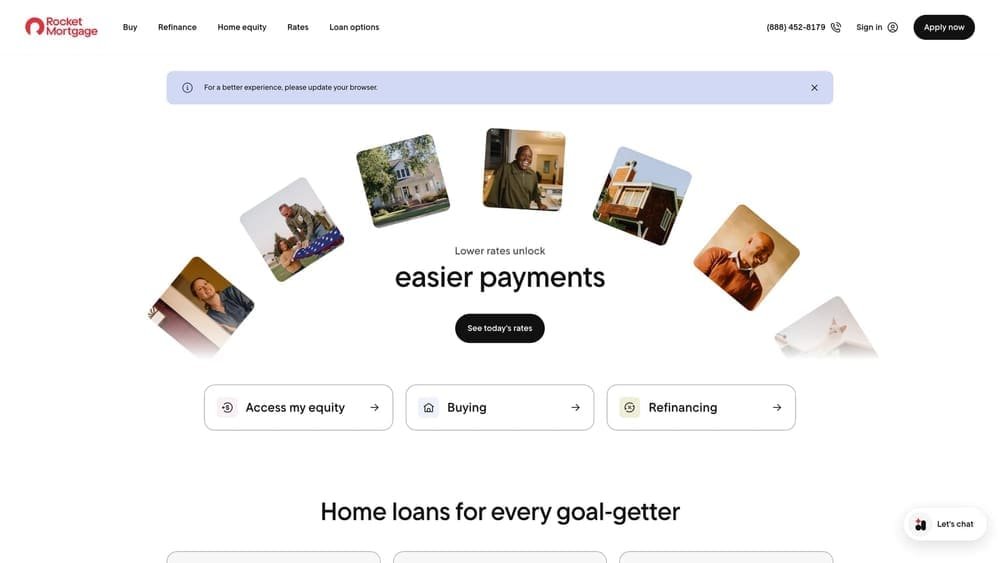
- A digital application with document upload, so you can submit returns and statements from your phone or laptop.
- Conventional, FHA, VA, and jumbo loans, covering most standard purchase and refinance needs.
- An online account with progress tracking, so you can see what the underwriter still needs.
Rocket offers electronic income and asset verification, which can shorten the paperwork when your accounts connect cleanly (verify the current options before relying on them). Setup is largely self-service, with a loan team stepping in as the file moves along.
The limitation is flexibility. Rocket is a single lender working to its own guidelines, so if your qualifying income comes out low after write-offs, there is no second shelf to try. Its listed programs are conventional, FHA, VA, and jumbo, so confirm directly whether it offers any bank statement or other non-QM option before assuming it fits an unconventional file. Self-employed borrowers with swings in income, a recent business change, or heavy deductions should expect to hit those walls sooner here than with a broker. Pricing is not stated in the planning notes, so see the Rocket website for current rates and fees.
Best for: Self-employed borrowers with clean, consistent two-year tax returns who prefer a fully online process.
3. Movement
Movement is a national retail lender that pairs its loan programs with dedicated loan officers. It sits between a fully digital lender and a local shop: you get a named person to walk through your income, with the backing of a large company.

That loan officer relationship is the distinguishing feature for self-employed buyers. Income calculation for a business owner involves judgment, such as how to treat a one-time dip, an owner draw versus distributions, or a second business, and a loan officer who understands those details can set expectations early. Movement also markets homebuyer-focused programs alongside its standard lineup (verify current offerings, since program details change).
- Conventional, FHA, VA, and jumbo loans, so you can match the program to your down payment and credit profile.
- Loan officer guidance, which helps you understand how your returns will be read before you submit them.
- Purchase and refinance options, so the same lender can handle a later rate-and-term move.
Integration and setup details are best confirmed on the Movement website. Expect to work with your loan officer day to day, supplying two years of returns and business documentation in the usual way.
The limitation is that standard agency and jumbo guidelines still apply. If your income only works through bank statements, a P&L-based approach, or another unconventional method, a lender built around standard documentation may not have a path, and you would need to confirm that directly. Pricing and starting rates are not fixed in the notes, so see the website.
Best for: Buyers who want a national lender with personal loan officer contact and standard documentation.
4. NFM Lending
NFM Lending operates through branch-based loan officers, so the experience depends heavily on who you sit across from. For a self-employed borrower, a loan officer who has closed many business-owner files can be worth more than a polished app, because the early conversation about how your income will be calculated often decides whether the deal works.
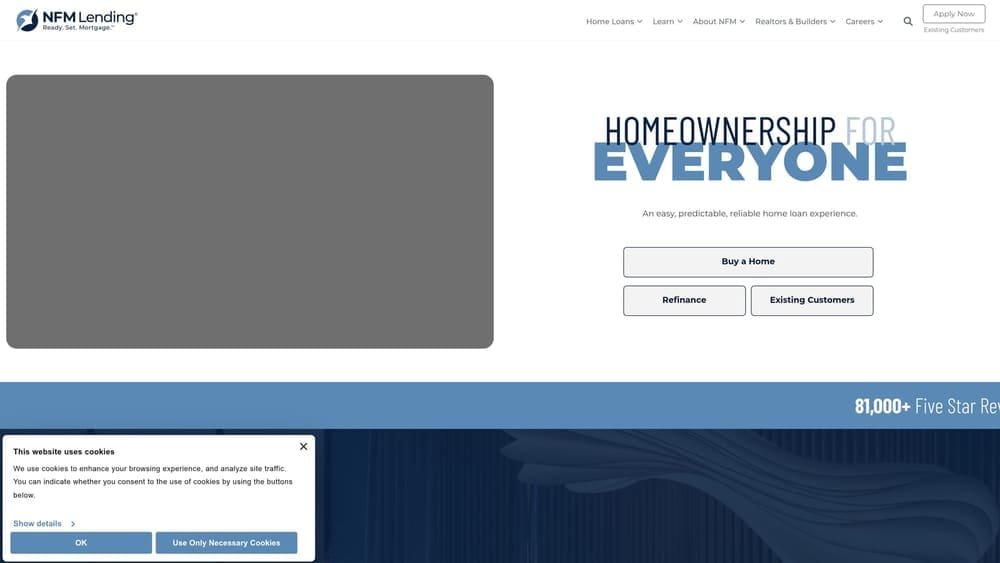
The branch model means hands-on income review. You can talk through your returns, business structure, and recent changes with someone local rather than submitting documents into a queue and waiting for questions.
- Conventional, FHA, VA, and USDA loans, which gives rural and lower-down-payment buyers a path alongside conventional financing.
- Local branch loan officers, who can review your income in person or by phone.
- Purchase and refinance options under the same roof.
Integration details are not specified in the notes, so ask about document upload and the closing timeline when you call. Day to day, you work with the branch loan officer, with processing and underwriting handled behind them.
The main caution is consistency. Offerings vary by branch and state, so self-employed flexibility has to be confirmed with the specific office you contact, including whether any non-QM option exists. The listed products are standard agency programs, which means the same two-year documentation rules apply. Pricing is not stated; see the website, and expect rate and fee differences between offices to be worth comparing.
Best for: Borrowers who want in-person or local guidance through documentation.
5. Alcova Mortgage
Alcova Mortgage is a Southeast-focused lender with a presence in Virginia. Its pitch is regional knowledge: appraisers, title practices, and local market quirks in places like Hampton Roads, Richmond, and Northern Virginia are familiar territory rather than an afterthought.
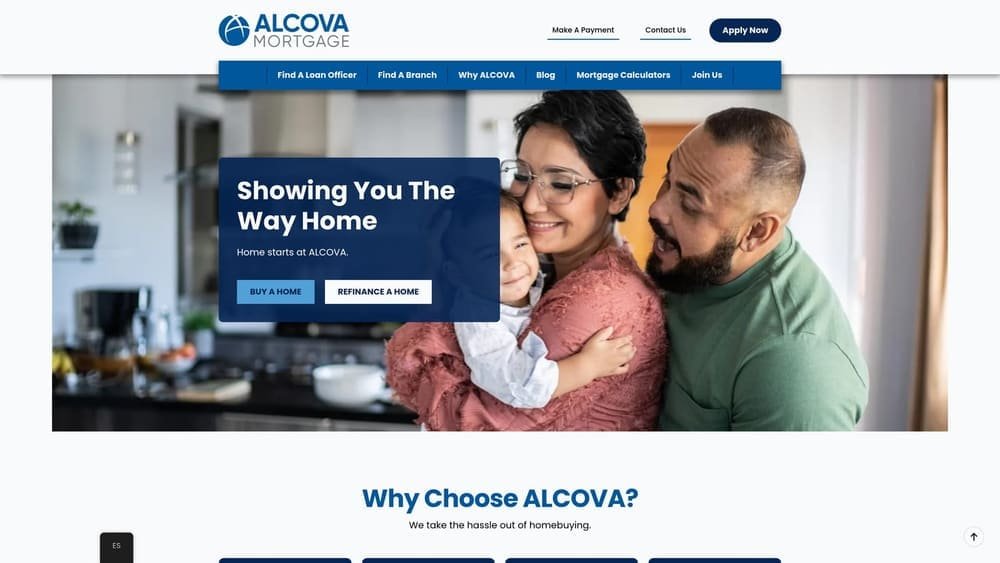
For a self-employed buyer, that matters less for income rules, which come from the lender’s guidelines, and more for the surrounding process. A team that closes Virginia loans regularly tends to anticipate the questions that slow a file down, such as how condo or HOA documents are handled or how local timelines run.
- Conventional, FHA, VA, and USDA loans, covering most Virginia purchase scenarios including rural USDA areas.
- Regional market knowledge, which can smooth appraisal, title, and closing steps.
- Purchase and refinance options for both new buyers and existing homeowners.
Integration specifics are not listed in the notes, so confirm the application and upload process directly. Expect to work with a loan officer and processor on a regional team.
The trade-off is scale and flexibility. Alcova has a smaller footprint than the national lenders here and works from a single set of guidelines, so a self-employed file with unusual income may not find an alternate route. As with the others, ask directly whether a bank statement or similar product exists rather than assuming. Pricing is not stated; see the website for current details.
Best for: Self-employed borrowers who want a regional lender familiar with Virginia markets.
6. Veterans United Home Loans
Veterans United Home Loans specializes in VA loans for veterans and service members nationwide. If you are self-employed and eligible for VA benefits, this is the most focused option on the list, because the lender’s whole operation is organized around the VA process.

VA underwriting for self-employed borrowers generally follows the documentation standards in the VA Lenders Handbook, which looks for a stable, documented income history, commonly two years. A lender that handles VA files all day knows how to present a business owner’s income cleanly and how to work through the entitlement paperwork.
- VA purchase and refinance loans, which can allow low or no down payment for eligible borrowers.
- Certificate of Eligibility assistance, so you do not have to chase the paperwork yourself.
- Military-focused loan support, with staff who understand service history and benefit rules.
Setup is built around the VA workflow, with your eligibility confirmed early and a dedicated team guiding the file. Details on its digital tools are best checked on its website.
The limitation is scope. It is focused on VA borrowers, so it does not suit non-veterans, and it is not a route for non-QM income documentation such as bank statement loans. A veteran whose returns show too little income for a standard VA approval would need a different channel. Pricing is not stated in the notes; see the website.
Best for: Self-employed veterans and service members using VA loan benefits.
Which Lender Fits Which Self-Employed Situation
Match the lender to the problem your file has, not to the biggest name. Three standouts cover most Virginia cases.
- Heavy write-offs or uneven income: Duane Buziak at Virginia Mortgage Broker. Shopping 500+ wholesale lenders and having bank statement and DSCR paths available is the strongest answer when tax returns understate what you earn.
- Clean two-year returns: Rocket, Movement, or NFM Lending can work well, and a broker can still compare their pricing against the wholesale market.
- Veterans: Veterans United for a VA-focused process, though Duane Buziak also handles VA loans, including to 500 FICO.
- Regional preference: Alcova for Virginia market familiarity.
Self-Employed Mortgage Questions Answered
Do I need two years of tax returns?
Usually yes for full-documentation loans. Fannie Mae and Freddie Mac selling guides generally look for a two-year self-employment history, with some flexibility in specific cases. Bank statement loans can use 12 or 24 months of deposits instead.
Do tax write-offs hurt my approval?
They can. Qualifying income is generally your net income after write-offs, so heavy deductions lower what a standard lender counts. Deductions that are not real cash expenses, like depreciation, are sometimes added back.
What is a bank statement loan?
A non-QM loan that calculates income from deposits in your bank statements rather than tax returns. Rates are typically higher than full-documentation loans.
Does pre-approval need a hard credit pull?
Not at the start. A soft pull mortgage broker like Duane can run a mortgage pre approval without hard pull, so you can compare options before any hard inquiry.
What mistakes should I avoid?
Avoid switching to self-employment right before applying, moving large undocumented deposits, and letting several lenders pull your credit before you compare.
Ready to see what Virginia’s top-ranked mortgage broker can do for you? Duane Buziak offers a no-hard-pull pre-approval so you can explore your options with zero credit impact. With access to 500+ wholesale lenders, you get better rates than any single bank can offer. Get your free mortgage review today.