

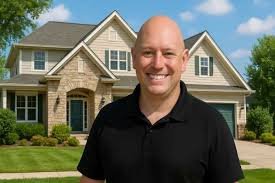
A $325,000 home with 3.5% down means $11,375 up front before closing costs. On the same price, many USDA loans Virginia buyers use require $0 down if the property and household qualify. At 6.50% on a 30-year term, financing about $313,625 versus $325,000 changes principal and interest by roughly $72 a month – but the bigger difference is preserving more than $11,000 in cash. Over five years, that can mean keeping roughly $15,695 available between down payment avoided and payment difference, before taxes, insurance, and USDA fees.
By Duane Buziak, Mortgage Maestro, NMLS#1110647.
For many buyers outside the hottest core neighborhoods, USDA is not a niche loan. It is a practical path to homeownership in parts of Virginia where prices still fit the program and commuting to Richmond, Williamsburg, Charlottesville, or Hampton Roads remains realistic. The catch is that USDA has stricter location and household income rules than FHA or conventional financing, so eligibility is about more than credit score and debt ratio.
What USDA loans in Virginia actually do
USDA home loans are designed for eligible rural and semi-rural areas, with a government guarantee that allows approved lenders to offer 100% financing. That is why the product stands out for first-time buyers and move-up buyers who have steady income but do not want to drain reserves for a down payment.
In Virginia, this matters most in counties and fringe suburban areas where home prices remain below the conforming loan limit and where USDA maps still include large pockets of eligible land. For 2026 planning, the baseline conforming loan limit in most Virginia counties is $806,500, which means USDA is competing less with jumbo and more with FHA and conventional low-down-payment options. Source: https://www.fhfa.gov/data/conforming-loan-limit-cll-values
USDA also includes upfront and annual guarantee fees. These are usually lower than FHA mortgage insurance, but they still affect the payment. Credit standards are often flexible compared with many conventional programs, though approval is never just about one score.
Where USDA loans Virginia buyers use tend to work best
The biggest misconception is that USDA only applies to farmland. In practice, many eligible properties are in smaller towns, outer-ring suburbs, and developing corridors.
Around Richmond, buyers often find USDA-eligible pockets in Goochland, Louisa, Caroline County, and parts of Hanover outside denser suburban zones. Around Fredericksburg, some outer areas of Spotsylvania and Caroline may fit better than more built-up corridors. Near Williamsburg and Yorktown, eligibility can exist just outside the highest-density sections. In the Charlottesville orbit, Albemarle County can be mixed – some addresses qualify, some do not.
Price is the second filter. Local median values shift fast, but recent market snapshots show why USDA remains relevant in certain Virginia markets. Zillow market data has placed median home values around the low-to-mid $300,000s in Henrico County, the low $400,000s in Chesterfield, around the upper $300,000s to low $400,000s in Hanover, and often above that in Albemarle. Goochland and Louisa can vary widely by micro-market, but they still present more USDA-viable inventory than close-in urban neighborhoods. Source: https://www.zillow.com/home-values/
That local spread matters. A buyer priced out of Short Pump or central Henrico may still find an eligible property and better cash-to-close in Ashland, Louisa, or Caroline County.
USDA loans Virginia rules that matter most
The location map is non-negotiable. The home must be in a USDA-eligible area, and the property must be a primary residence. Household income also matters, which is different from most standard agency loans. USDA counts income from adult household members even if they are not all on the loan, because the program is intended for moderate-income households.
Credit is more nuanced than many headlines suggest. Automated approvals are often easier once scores are around 640, but lower scores can still be possible with stronger compensating factors. Those factors can include lower debt ratios, stable employment, or post-closing reserves. In practical underwriting, a buyer at 680 with clean payment history will usually have a smoother path than a buyer at 620 with recent late payments, even if both technically fit broad program guidelines.
Closing costs still exist. In Virginia, buyers commonly see total closing costs and prepaid items land around 2% to 5% of the purchase price, depending on taxes, insurance escrows, title charges, and whether discount points are paid. USDA allows seller concessions within program limits, which can help offset that cash need.
Household income limits and property eligibility are set by USDA and updated periodically. Buyers should verify both before shopping too aggressively. Source: https://www.rd.usda.gov/programs-services/single-family-housing-programs/single-family-housing-guaranteed-loan-program
USDA vs FHA vs conventional in Virginia
| Loan type | Down payment | Typical score comfort zone | Mortgage insurance or fee structure | Best fit | |—|—:|—:|—|—| | USDA | 0% | Often 640+ for easier automated approval | Upfront guarantee fee plus annual fee | Eligible rural or semi-rural buyers with moderate household income | | FHA | 3.5% | Often 580+ with stronger file preferred | Upfront MIP plus monthly MIP | Buyers needing flexible credit or higher DTI tolerance | | Conventional | 3% to 5% for many first-time buyers | Often 680+ for stronger pricing | Private MI if under 20% down | Buyers with higher credit and stronger reserves |
For a buyer with limited cash, USDA often beats FHA on monthly cost because annual fees are usually lighter than FHA monthly mortgage insurance. For a buyer with higher income or an ineligible address, conventional may win on flexibility and long-term cost. It depends on map eligibility, household earnings, and how much cash you want to keep after closing.
A practical 6-step roadmap for USDA loans Virginia buyers
1. Check the address first
Before comparing rates, confirm the target property area is USDA-eligible. This avoids wasting time on homes that cannot use the program.
2. Calculate total household income
USDA looks beyond borrower income. Include other adult household earnings to test the program cap early.
3. Review credit with a soft-pull prequalification
A soft-pull review helps estimate whether USDA, FHA, or conventional will price better without pressing your score down with a hard inquiry at the start.
4. Build a real cash-to-close estimate
Even with 0% down, plan for closing costs, prepaid taxes and insurance, appraisal, and earnest money. Keeping at least 1-2 months of payment reserves after closing is a smart cushion even when not strictly required.
5. Shop by payment, not just price
In counties where taxes and insurance vary a lot, a $350,000 home can be more affordable than a $330,000 home if the tax rate, HOA, or insurance premium is lower.
6. Compare USDA against FHA and conventional on the same day
Rate, guarantee fee, monthly payment, seller credits, and total cash needed should be measured side by side. Large retail lenders such as Rocket or Freedom may offer speed and broad advertising reach, while local brokers often compete better on lender access, fee transparency, and scenario matching. That is especially useful when a file sits near the edge of USDA income or credit rules.
Common lender comparison questions
Buyers often compare local brokers against CapCenter, Atlantic Coast, NFM, Movement, CrossCountry, or Veterans United. The meaningful differences are usually not brand size but execution. On USDA files, the right lender match can come down to how carefully household income is calculated, whether overlays exceed standard guidelines, how seller credits are structured, and how quickly property eligibility and appraisal issues are handled.
A local mortgage broker can sometimes offer more flexibility because the loan may be placed with multiple wholesale lenders rather than one retail channel. A large direct lender may still be the right fit if its pricing is sharp that week or if the borrower already has a relationship there. The smart move is not loyalty to a logo. It is comparing the same scenario across fees, rate, monthly payment, and underwriting fit.
FAQ: USDA loans Virginia buyers ask most
1. Do USDA loans require a down payment?
No. Qualified buyers can finance 100% of the purchase price, subject to appraisal and program rules.
2. Is USDA only for first-time buyers?
No. Repeat buyers can use USDA if they meet occupancy, income, and property eligibility requirements.
3. What credit score is needed?
Many lenders prefer 640 or higher for smoother automated approval, but lower scores may still work with stronger overall files.
4. Are there income limits?
Yes. USDA applies household income limits, not just borrower income, so all adult household earnings can matter.
5. Can USDA be used in Richmond or Virginia Beach?
Some nearby fringe areas may qualify, but many central or dense areas do not. The exact address must be checked.
6. How much are closing costs?
In Virginia, many buyers should budget roughly 2% to 5% of the purchase price, though seller concessions may reduce cash needed.
7. Is USDA cheaper than FHA?
Often yes on monthly cost, especially when comparing annual USDA fees with FHA monthly mortgage insurance, but rate and file strength can change the outcome.
8. Can self-employed buyers use USDA?
Yes, if income is stable, documented, and meets program and lender requirements. The paperwork is usually heavier than for W-2 borrowers.
This article is for educational purposes only and does not constitute financial or legal advice.
If USDA fits your map, income, and payment goals, it can be one of the cleanest ways to buy in Virginia without draining cash reserves – especially in places where the drive is still manageable and the home prices have not run away from local incomes.
Duane Buziak, Mortgage Maestro | NMLS: 1110647 | Licensed VA/TN/GA/FL | VA Broker of the Year 2024-2025 | Top 1% Nationwide | Coast2Coast Mortgage | (804) 212-8663.