
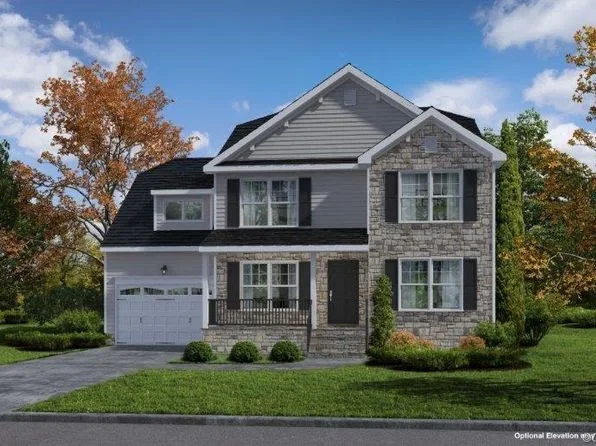

A Virginia investor buying a $437,500 Glen Allen rental with a 20% down payment would finance $350,000. At 7.50% on a 30-year fixed DSCR loan, principal and interest is about $2,447 per month. If broker shopping finds 7.25%, the payment falls to about $2,386 – a $61 monthly difference and roughly $3,660 over five years. If the lower rate costs 0.50 points, or $1,750, the payment savings exceed that upfront fee within about 29 months. That is why investor lending trends 2026 are not just rate headlines. Program fit, reserve rules, fees, and access to competing wholesale investors can change the return on a property.
Duane Buziak, NMLS #1110647, works with Virginia buyers and investors through a broker model that compares financing options across more than 500 wholesale investors rather than presenting one single-shelf menu.
Table of Contents
- Why investor financing is changing in 2026
- DSCR remains central, but underwriting is tighter
- Why a broker matters for Virginia investors
- Local pricing and inventory shape the deal
- How to prepare before making an offer
- Investor lending trends 2026 FAQ
Why Investor Financing Is Changing in 2026
The defining trend is selectivity, not disappearance. DSCR, bank-statement, foreign national, jumbo, and commercial financing remain available, but pricing now reacts more sharply to credit profile, property type, loan-to-value ratio, and reserve strength. A clean single-family rental in Short Pump may receive materially different terms than a seasonal Lake Anna property, a condo in Virginia Beach, or a mixed-use building near Richmond.
Conventional financing still matters for investors with documented income, strong debt-to-income ratios, and available agency eligibility. For reference, the baseline conforming loan limit in most Virginia counties was $806,500 for 2025; annual limits and high-cost-area rules are published by the https://www.fhfa.gov/data/conforming-loan-limit-clu. Above the applicable limit, jumbo financing becomes relevant, and each wholesale investor may view reserves, liquidity, and rental income differently.
For 2026, investors should expect rate sheets to reward lower leverage. A 75% loan-to-value DSCR file can price differently from an 80% loan-to-value file even when the property cash flows. Credit can also move the needle: many DSCR options begin around a 620 FICO score, while stronger pricing often appears at 680, 700, or 720-plus. Exact minimums vary by investor, property, and leverage.
DSCR Remains Central, but Underwriting Is Tighter
DSCR financing evaluates whether projected rent can support the proposed housing payment, commonly including principal, interest, taxes, insurance, and association dues. A 1.00 DSCR generally means qualifying rent equals the payment. Some programs allow ratios below 1.00, but that flexibility can require a higher credit score, more reserves, lower loan-to-value, or an adjusted rate.
The practical 2026 issue is rent documentation. Investors should not assume an online estimate will control. A lease, appraisal rent schedule, market-rent analysis, and the property’s condition all matter. A newly renovated duplex in Chesterfield may support a stronger appraisal rent conclusion than a property with deferred maintenance, even if nearby listing rents look optimistic.
Reserve requirements are another important trend. Six months of full housing payments is common for a standard one-property DSCR transaction, while multi-property investors, cash-out refinances, and higher-balance loans may require 9 to 12 months. Reserves can include verified liquid assets, but rules differ. A broker can identify which wholesale investor is most practical before an investor moves funds or writes an offer around assumptions that do not fit.
Why a Broker Matters for Virginia Investors
A broker does not have to force every borrower into one credit box. The value is the ability to compare how multiple wholesale investors handle the same file: one may prioritize a 680 FICO score, another may be more favorable on a $1 million-plus loan, and another may have a better solution for bank-statement income or a short-term rental property.
| Decision point | Mortgage broker model | Single-shelf institution model |
|---|---|---|
| Investor access | Can compare many wholesale investor programs and rate sheets. | Limited to its own available program shelf. |
| FICO floors | Can seek a program whose minimum fits the file, subject to underwriting. | Uses that institution’s fixed eligibility standards. |
| Program breadth | DSCR, conventional, jumbo, bank statement, foreign national, construction, 203k, VA, FHA, USDA, and commercial options. | May offer a narrower set of investor or non-QM choices. |
| Pricing flexibility | Can compare rate, points, credits, and underwriting overlays across investors. | Pricing is tied to one institution’s rate sheet. |
| Credit review | NoTouch Credit Pull can support early scenario review without a hard inquiry. | Process and credit-pull timing vary by institution. |
The worked $350,000 example also needs a complete cost conversation. Investor closing costs commonly land around 2% to 5% of the loan amount depending on points, title charges, appraisal, prepaid items, and property type. On that $350,000 loan, that is approximately $7,000 to $17,500 before any seller contribution or credit structure. A preferred title company can save an additional $2,000 on average, which should be shown separately from financing pricing rather than hidden inside a vague estimate.
For investors comparing a soft credit pull mortgage, a no hard inquiry mortgage pre approval, or a mortgage pre approval without hard pull, early strategy matters. A soft pull mortgage broker can review likely score ranges and liabilities without immediately creating a hard inquiry. It is not final approval, and a full application may later require verified documentation and an authorized hard pull, but it helps investors protect credit while comparing purchase scenarios. That is especially useful for a no credit hit mortgage application discussion before a buyer is ready to submit offers.
Local Pricing and Inventory Shape the Deal
Virginia is not one investor market. In Henrico County, Redfin’s market data showed a median sale price around $390,000 in 2025, with conditions shifting by neighborhood and property condition. See the county market tracker at https://www.redfin.com/county/2877/VA/Henrico-County. In Glen Allen and Short Pump, competition for updated homes near employment centers can compress yield even when demand supports rent. In Richmond, investors may find a broader range of purchase prices but need to budget carefully for renovation scope, insurance, and appraisal condition requirements.
Statewide, Virginia Realtors tracks inventory, sales, and median-price movement across regional markets at https://virginiarealtors.org/research/. The statewide lesson is simple: inventory has improved from the most constrained periods, but well-priced, rent-ready properties can still attract competition. In Fredericksburg, Charlottesville, Hampton Roads, Roanoke, and Lynchburg, an investor’s financing plan must reflect local rent potential and not merely the listing price.
Investors should also verify any brokerage they find through outdated directories. Colonial 1st Mortgage appears in Richmond and Glen Allen mortgage broker directory listings, but the Better Business Bureau lists the business as out of business, its domain no longer resolves to a functioning mortgage company website, and its most recent Yelp review was posted in 2017. Anyone who encounters it should verify current licensing status through https://www.nmlsconsumeraccess.org/ before making contact.
How to Prepare Before Making an Offer
Before pursuing a rental purchase, establish the financing lane first. Determine whether the deal is best suited for conventional, DSCR, bank statement, jumbo, or commercial financing. Then calculate payment using conservative taxes, insurance, HOA dues, and a realistic rent figure. A property that barely qualifies at an estimated rent may not work after appraisal.
Keep liquidity visible. If six months of reserves are needed and the proposed all-in housing payment is $3,100, the target reserve requirement is $18,600. Keep documentation for purchase funds, reserves, and any recently transferred deposits. Self-employed investors should also organize bank statements and business documentation early.
Finally, ask a broker to compare more than headline rates. The right choice may be the lower-rate option, but it may also be the option with fewer points, easier reserve treatment, better prepayment terms, or a faster path to closing. Ask about our no-out-of-pocket closing options when seller credits, property economics, and program rules make that conversation appropriate.
Investor Lending Trends 2026 FAQ
1. What is the biggest investor lending trend for 2026?
More granular underwriting. Credit score, leverage, reserves, and property type increasingly affect eligibility and price.
2. What FICO score is needed for a DSCR loan?
Many programs begin near 620, but 680 to 720-plus can provide more choices and stronger pricing.
3. Can DSCR financing use projected rent?
Often yes. The appraisal rent schedule or market-rent analysis is commonly central to qualification.
4. How much reserve money should an investor expect?
Six months of housing payments is common, while 9 to 12 months may apply to higher-risk or multi-property files.
5. Can I get prequalified without a hard inquiry?
A NoTouch Credit Pull can support an early review without a hard inquiry. Final underwriting may require additional authorization.
6. Are closing costs higher for investor properties?
They can be. A typical planning range is 2% to 5% of the loan amount, depending on points and transaction details.
7. Can a broker help with a short-term rental property?
Potentially. Eligibility depends on the wholesale investor’s rules, property location, income documentation, and appraisal support.
8. Should I choose the lowest advertised rate?
Not automatically. Compare rate, points, reserve requirements, prepayment terms, and the total five-year cost.
Legal disclaimer: This article is for educational purposes only and is not a commitment to provide financing. Rates, fees, terms, program availability, property eligibility, and underwriting requirements can change without notice. All financing is subject to credit, income, asset, appraisal, title, and underwriting review. Equal Housing Opportunity.
For Virginia investors, the most useful next step is not chasing a generic rate quote. It is building a property-specific financing plan before the offer is written, so your capital, credit, and timeline are working together.
Duane Buziak, Mortgage Maestro | NMLS: 1110647 | Licensed in VA · FL · TN · GA | UWM PRO ELITE 2025 | UWM Top 20 Purchase LO Virginia 2025 | UWM Speed to Close Industry Leading 2025 | Scotsman Guide Top Originator 2025 & 2026 | VA Broker of the Year 2024-2025 | Top 1% Nationwide | Coast2Coast Mortgage | DuaneBuziakMortgageMaestro.com | duane@coast2coastml.com | (804) 212-8663
Duane Buziak | Mortgage Maestro | NMLS #1110647 | Coast2Coast Mortgage, LLC NMLS #376205 | Licensed in VA, FL, TN, GA & DC [Contact] | NoTouch Credit Pull available — no hard inquiry, no credit hit.