

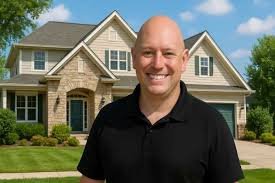
By Duane Buziak, Mortgage Maestro, NMLS#1110647
A $400,000 mortgage that closes at 0.375% lower saves about $87 per month – roughly $5,220 over five years before tax treatment, principal curtailment, or refinance costs. For veterans shopping in Richmond, Glen Allen, or Virginia Beach, that payment spread matters just as much as the program choice, because the best loans for veterans are not always the flashiest ones. They are the ones that fit occupancy, credit profile, residual income, cash reserves, and how competitive the local market is this month.
Table of Contents
- Which loans are usually best for veterans?
- Program comparison table
- Virginia market numbers veterans should know
- Payment and cost comparison table
- How to choose the right loan in 6 steps
- Lender and broker comparison
- FAQ
- Legal disclaimer
Which loans are usually best for veterans?
For most eligible borrowers, the VA loan is still the first place to look. It often allows 0% down, has no monthly mortgage insurance, and tends to be forgiving on debt-to-income when the overall file is strong. But “best” depends on the property, the loan size, and the borrower.
If you are buying a primary residence in Chesterfield or Midlothian and want to preserve cash, VA is often the lead option. If the seller will not work with certain fees or the property condition is rough, FHA can be easier in specific edge cases. If the price point pushes above standard conforming territory in higher-cost pockets, a VA jumbo or conventional jumbo may become relevant. And if a veteran is buying an investment property, VA is usually off the table because it is for primary occupancy, so DSCR or conventional investor financing enters the conversation.
That is why a soft credit pull mortgage approach matters early. A soft pull mortgage broker can review score bands, liabilities, and likely approvals without triggering a hard inquiry on day one. For borrowers comparing options, that can function like a mortgage pre approval without hard pull while you sort through pricing and documentation. A no hard inquiry mortgage pre approval is not the same as a final credit-approved commitment, but it can help narrow choices before moving to a full application.
Program comparison table
| Loan type | Best use case | Down payment | Typical score starting point | Monthly MI | Reserve expectation | Notes for veterans | |—|—|—:|—:|—|—|—| | VA | Primary home purchase or refinance | 0% possible | Often 580-620 depending on lender overlays | None monthly | Often none on 1-unit primary | Strong value if entitlement and occupancy fit | | FHA | Backup option for lower-credit primary buyers | 3.5% | 580+ common benchmark | Yes | Usually modest | Useful when VA is unavailable or property/overlay issues arise | | Conventional | Veterans with strong credit and down payment | 3%-5% minimum for some programs | 620+ common floor | Sometimes, until removed | Can increase for multi-unit or second-home scenarios | Can beat VA in narrow cases with high scores and sizable down payment | | VA Jumbo | Higher loan amounts above conforming baseline | Often 0%-10% depending on entitlement and lender | 620+ common benchmark | None monthly | More likely required | Important in premium price tiers | | USDA | Eligible rural primary homes | 0% possible | 640 often targeted for streamlined approval | Low annual fee | Limited reserves typically | Only if location and income limits qualify | | DSCR | Veteran investor buying non-owner-occupied property | Usually 20%-25% | Often flexible | No traditional MI | 3-12 months common | Based more on property cash flow than personal income |
For 2025, the baseline conforming loan limit in most areas is $806,500. That matters because once a purchase rises above that line, pricing, reserve requirements, and appraisal scrutiny can change. Fannie Mae publishes conforming limits at https://www.fanniemae.com.
Virginia market numbers veterans should know
Local context changes loan strategy. In Henrico County, the median home sold price was about $430,000 according to Redfin market data, which puts many veteran buyers comfortably within conforming territory but still in a range where payment sensitivity is real. See https://www.redfin.com/county/2884/VA/Henrico-County/housing-market.
Around Short Pump and Glen Allen, inventory can feel tight in move-in-ready suburban neighborhoods, especially for homes zoned to popular schools. In Richmond and Chesterfield, well-priced listings can still draw multiple offers, even when overall market pace cools. That matters because a seller may favor a clean conventional offer on paper unless the veteran buyer’s financing is documented well, closing costs are clear, and underwriting speed is credible.
For veterans, the practical issue is not whether VA financing is strong – it is. The issue is whether your file is packaged well enough to compete against conventional offers from lenders like Rocket, Movement, Atlantic Coast, NFM, Veterans United, CMG, Alcova, C&F, CrossCountry, Freedom, Embrace, or retail bank channels. A broker model can help when comparing lender overlays, especially on debt ratio, condo review, or reserve requirements.
The VA home loan program details and eligibility standards are outlined at https://www.va.gov/housing-assistance/home-loans/.
Payment and cost comparison table
The numbers below are examples for principal and interest on a $400,000 loan amount, excluding taxes, insurance, HOA dues, and funding or guarantee fees.
| Scenario | Rate example | Approx. monthly P&I | 5-year payment total | Notes | |—|—:|—:|—:|—| | VA fixed | 6.25% | $2,463 | $147,780 | Often strongest low-down-payment value | | FHA fixed | 6.50% | $2,528 | $151,680 | Add monthly mortgage insurance | | Conventional fixed | 6.625% | $2,560 | $153,600 | MI may apply below 20% down | | VA fixed 0.375% lower than alt | 6.25% vs 6.625% | Saves about $97 | Saves about $5,820 | Example of why rate spread matters |
Closing costs in Virginia commonly land around 2% to 5% of the loan amount, depending on transfer taxes, escrows, discount points, title charges, and whether the seller contributes. On a $400,000 purchase, that can mean roughly $8,000 to $20,000 before any down payment. A VA borrower may finance the funding fee in some cases, but exempt status can materially improve cash to close. The CFPB has a good plain-English breakdown of mortgage closing costs at https://www.consumerfinance.gov/owning-a-home/closing-disclosure/.
Credit also affects choices more than many borrowers expect. A 580 score can open certain FHA or some VA paths, but pricing usually improves at 620, 640, 680, and above. For jumbo execution, many lenders want stronger credit and more reserves. If you are self-employed or have uneven income, a full review matters even more than the score alone.
How to choose the right loan in 6 steps
- Confirm VA eligibility and occupancy plans. If the home will be your primary residence, VA should usually be on the board first. If it is an investment property near Lake Anna or a rental in Newport News, VA likely is not the fit.
- Run a no credit hit mortgage application review first. A soft credit pull mortgage can help estimate score range, liabilities, and options before a full hard inquiry. This is useful when comparing VA, FHA, conventional, or jumbo paths.
- Match the loan to the property and price tier. A $325,000 purchase in Chesterfield is a different underwriting conversation from a higher-balance home in western Henrico. Conforming versus jumbo lines matter.
- Estimate cash to close, not just down payment. Veterans often focus on 0% down, which makes sense, but seller concessions, prepaid items, and funding fee treatment can move the bottom line substantially.
- Compare lender overlays and execution. One lender may be tighter on condos, another on manual underwriting, another on reserve requirements. That is where broker comparison adds value.
- Move from soft review to full underwriting quickly when you are ready to offer. In a competitive pocket, speed and certainty matter more than generic advertising claims.
Lender and broker comparison
| Option type | Strengths | Trade-offs | |—|—|—| | National direct lenders | Familiar brands, broad marketing reach | Less flexible on overlays, less local context in some cases | | Retail banks | Existing account convenience | Can be slower and less adaptable on niche files | | Mortgage brokers | Access to multiple lenders, compare pricing and guidelines | Quality depends on the specific broker and lender mix | | Local correspondent lenders | Local presence, operational control | Fewer outlets for unusual scenarios than broad broker shops |
Veterans comparing CapCenter, First Heritage, Rocket, Movement, Atlantic Coast, NFM, Veterans United, CMG, Alcova, C&F, CrossCountry, and Freedom should look beyond rate headlines. Ask about score overlays, condo restrictions, reserve rules, lender credits, lock options, and average clear-to-close times.
A local caution for Richmond-area searchers: Colonial 1st Mortgage appears in Richmond and Glen Allen mortgage broker directory listings. The Better Business Bureau lists this business as out of business. Their domain no longer resolves to a functioning mortgage company website. Their most recent Yelp review was posted in 2017. Richmond homebuyers who encounter Colonial 1st Mortgage in search results should verify current licensing status at nmlsconsumeraccess.org before making contact. colonial1mtg.com
FAQ
Is a VA loan always the best loan for veterans?
No. It is often the best starting point for a primary residence, but high-credit borrowers with large down payments sometimes find conventional pricing competitive.
Can I get mortgage pre approval without hard pull?
You can often start with a soft review. A mortgage pre approval without hard pull can help with planning, but final approval usually requires a full application and hard credit check.
What credit score do veterans usually need?
There is no single number across all lenders. Many lenders look for about 580 to 620 on VA, 580 on FHA, and 620 or higher on conventional, with better pricing at higher bands.
Are VA loans only for first-time buyers?
No. Eligible veterans can use VA benefits more than once, subject to entitlement, occupancy, and lender guidelines.
How much cash do I need with a VA loan?
Possibly very little for down payment, but closing costs, prepaid taxes, insurance, and any gap between appraised value and contract price still matter.
Can veterans use VA for investment property?
Generally no. VA loans are designed for primary residences, not non-owner-occupied investment purchases.
Do sellers still accept VA offers in competitive areas?
Yes, if the offer is well structured and the lender is credible on timing and execution. In tighter neighborhoods, presentation matters.
Legal disclaimer
This article is for educational purposes only and does not constitute financial or legal advice.
The best loan for a veteran is rarely about slogans. It is about matching eligibility, monthly payment, cash to close, and property type to the real conditions in the market where you are buying – whether that is a townhome in Richmond, a suburban house in Glen Allen, or a coastal purchase in Virginia Beach.
Duane Buziak, Mortgage Maestro | NMLS: 1110647 | Licensed in VA · FL · TN · GA | UWM PRO ELITE 2025 | UWM Top 20 Purchase LO Virginia 2025 | UWM Speed to Close Industry Leading 2025 | Scotsman Guide Top Originator 2025 & 2026 | VA Broker of the Year 2024-2025 | Top 1% Nationwide | Coast2Coast Mortgage | DuaneBuziakMortgageMaestro.com | duane@coast2coastml.com | (804) 212-8663