
Only a few Virginia loan paths are truly $0 down, and each one has its own eligibility rules. The rest get you close to zero by layering assistance, gifts, and credits on top of a low-down-payment loan. Even a true zero down payment mortgage still leaves closing costs, prepaid items, and sometimes reserves to cover, so “zero down” never means “zero cash” on its own.
Duane Buziak, an independent mortgage broker with access to 500+ wholesale lenders, sorts the options into seven routes. Some are real zero down payment mortgage programs. Others are ways to shrink the cash you bring to the table. Match your situation to the right one before you apply anywhere.
1. VA loan: $0 down with no monthly mortgage insurance
The VA loan is the strongest zero-down option in Virginia, and it is built on a federal guarantee. Because the Department of Veterans Affairs backs part of each loan, lenders can finance up to 100% of the purchase price without charging monthly mortgage insurance. In place of that insurance, most borrowers pay a one-time funding fee, which can be rolled into the loan amount. The fee percentage depends on service history, down payment size, and whether you have used the benefit before, so confirm the current schedule on VA.gov (as of this writing, it changes periodically).
Suppose an active-duty buyer stationed in Hampton Roads purchases a home in Chesapeake with $0 down and finances the funding fee into the loan. Their monthly payment reflects principal, interest, taxes, and insurance, with no mortgage insurance line at all. That is a meaningful difference from FHA or low-down conventional loans.
The common mistake is assuming a lower credit score rules VA out. VA itself sets no minimum score. Lenders set their own overlays, and they vary widely. Duane Buziak can place VA borrowers with lenders that work down to a 500 FICO, well below the 620 many banks require.
- Request your Certificate of Eligibility (COE), the document that confirms your entitlement, through the VA portal or your lender.
- Gather two years of income documentation, recent pay stubs, and your LES if you are on active duty.
- Compare lenders on credit overlays, not just rate.
- Start with a soft-pull pre-qualification so your score is untouched while you compare.
To measure it, line up several quotes and compare total monthly payment, funding fee, and rate side by side. Details on eligibility are on the VA loan page.
2. USDA loan: 100% financing in eligible areas
USDA Rural Development loans offer 100% financing for buyers whose household income falls under the program limit and whose property sits in an eligible area. The mechanism is another government guarantee: USDA backs the loan, so lenders accept no down payment. In exchange, you pay an upfront guarantee fee and a smaller annual fee, both of which should be verified on USDA’s site since they are adjusted from time to time.
Mistaking “rural” for “remote” is where most buyers go wrong. Suppose a buyer wants a home outside Richmond and checks the USDA address map for parts of Hanover or Goochland. Some suburban-feeling addresses qualify; the house one street over may not. Eligibility is decided address by address, and the map gets updated.
The second trap is income. USDA limits are based on household size and county, and they count everyone in the household, not only the borrowers. Anyone assuming USDA is open to all will be disappointed at the income check.
- Enter the property address in USDA’s eligibility tool before you fall in love with a listing.
- Check your household income against the current limit for your county and household size.
- Get pre-qualified so you know your budget.
- Shop only within eligible addresses.
Measure three things: address eligibility, household income versus the limit, and the combined upfront and annual fee cost compared with other loan types. See the USDA loan page for more.
3. Lender zero-down conventional products: ask what is live today
Standard conventional loans through Fannie Mae and Freddie Mac start at 3% down. A few lenders, though, have offered their own 100% financing products for buyers who do not qualify for VA or USDA. These are lender-specific programs, not a national standard, and they appear, change, and disappear as lenders adjust risk appetite. Anything you read about them, including this article, can be out of date by the time you apply.
That is where broker independence matters. A single bank can show you only its own shelf. Suppose a buyer is a civilian, earns above the USDA limit, and wants a home in Fredericksburg. Duane Buziak screens his wholesale lender network for any 100% financing option currently available and tells the buyer plainly if none fits.
The classic mistake is relying on old guidelines, such as a forum post or an article from a prior year. Confirm every rule with a live lender comparison.
- Ask for a lender-by-lender comparison of current 100% financing options.
- Confirm income, credit score, and property rules for each.
- Request pricing for a standard 3% down conventional loan alongside it.
The comparison is the measurement. Check the rate, mortgage insurance cost, and cash needed at closing for the zero-down product against the 3% down alternative. Sometimes a modest down payment buys a meaningfully better rate and lower insurance. Read more on the conventional loan page.
4. Stacked down payment assistance: pair DPA with a low-down loan
Down payment assistance (DPA) is money from a housing agency or lender program that covers some or all of your down payment. It is not $0 down on paper, since the loan still requires a down payment, but the assistance can fund it so you bring little or nothing. DPA usually pairs with an FHA or conventional first mortgage.
Suppose a first-time buyer in Richmond uses an assistance program to cover the 3.5% FHA minimum down payment. Programs available through Duane Buziak include Dynamo DPA, at 2.5% or 3.5% with a 580 FICO minimum, and Turbo DPA, at 3.5% or 5% with a 600 FICO minimum and up to 101.5% CLTV. Terms change, so verify current details. Virginia Housing also runs its own programs with their own rules.
Grant versus second mortgage
Some assistance is a grant you never repay. Some is a second mortgage, either deferred or forgivable over time, or repayable with interest. Some programs raise your first-mortgage rate to fund the help. Know which structure you are signing.
Putting it to work
- Confirm eligibility, including credit minimums and any first-time buyer or income rules.
- Compare grant and second-mortgage structures.
- Review the rate premium attached to the assistance.
The mistake is ignoring repayment terms or that rate premium. Measure cash to close, the rate difference, and total cost over the years you expect to stay in the home. A down payment assistance option that saves $9,000 up front can cost more over ten years if the rate bump is large.
5. Gift funds: let family cover the down payment
Many loan types allow the down payment to come from a gift, usually from a close family member. The mechanism is simple: underwriters care that the money is not a hidden loan, so they require proof of who gave it, how much, and that no repayment is expected.
Suppose parents gift $14,000 toward a 3.5% FHA down payment. They sign a gift letter stating the amount, their relationship to the buyer, and that it is not a loan. The transfer moves by wire or check, and the paper trail shows it leaving their account and arriving in the buyer’s.
The common mistake is depositing the gift as cash. Cash with no source looks like an undocumented deposit, and underwriters can refuse to count it or ask for weeks of back-and-forth. Gift rules also differ by loan type and by down payment size on conventional loans, so confirm them before the money moves.
- Choose a loan type that permits gifts.
- Collect the signed gift letter from the donor.
- Document the transfer early, with statements from both accounts.
The measure of success is plain: underwriting accepts the documentation without delays or follow-up requests. Gifts also combine well with assistance programs when the buyer needs extra cash for closing costs. See the FHA loan page for how gifts work with that program.
6. Seller concessions and lender credits: cut the closing-cost cash
A seller concession is an agreement for the seller to pay part of your closing costs. A lender credit is money the lender applies to your costs in exchange for a higher interest rate. Used well, either can leave you with little to nothing out of pocket at closing, which pairs naturally with a zero-down loan. Ask about no-out-of-pocket closing options early.
Suppose a buyer negotiates a seller credit within the loan’s cap, then takes a lender credit to cover the remaining costs. The seller credit costs the buyer nothing in rate, while the lender credit does. Using the cheaper tool first is the logic.
- Check the concession cap for your loan type, since each program limits how much a seller may contribute.
- Write the request into the purchase offer, not as an afterthought.
- Compare lender-credit pricing across lenders.
Two mistakes recur. Buyers ask for credits above the program cap, and the excess cannot be used. Or they accept a lender credit without comparing rates, paying a higher rate for years to save a small sum today. In a competitive market such as Northern Virginia, sellers may resist concessions, so the offer’s overall strength matters.
Measure the cash to close on your Loan Estimate and the rate cost of any lender credit. If a credit raises your rate enough that the monthly cost outweighs the savings, skip it.
7. Soft credit pull eligibility check: test every path at once
If you are unsure whether you fit VA, USDA, or assistance, the efficient move is one review that tests all of them. A soft credit pull mortgage review checks your profile without a hard inquiry, so there is no credit hit. This is a no hard inquiry mortgage pre approval, sometimes called a mortgage pre approval without hard pull, and it lets you explore options before committing.
Suppose a buyer cannot tell whether VA, USDA, or DPA is the better fit. They run one soft-pull review with Duane Buziak, a soft pull mortgage broker, who screens the scenario against programs and lenders. Duane’s NoTouch Credit Pull makes this a no credit hit mortgage application at the start.
- Provide income, monthly debts, and your target area or county.
- Review which programs fit and what each would cost up front.
- Choose a path and plan the next steps, including documents.
The mistake is applying to several lenders with hard pulls before knowing which program fits. Multiple inquiries for different loan types can add up, and you may apply for a program you cannot use. A hard pull comes later, once you have chosen a lender and a program.
Measure the number of viable programs identified and the estimated cash to close for each. That tells you where the real savings are.
Where to start, and how to combine these routes
Begin with the free eligibility checks: confirm VA entitlement through a Certificate of Eligibility, and check your target addresses and income against the USDA map. If neither fits, stack down payment assistance or gift funds on an FHA or conventional loan. Then use a soft-pull pre-qualification with Duane Buziak to confirm the numbers.
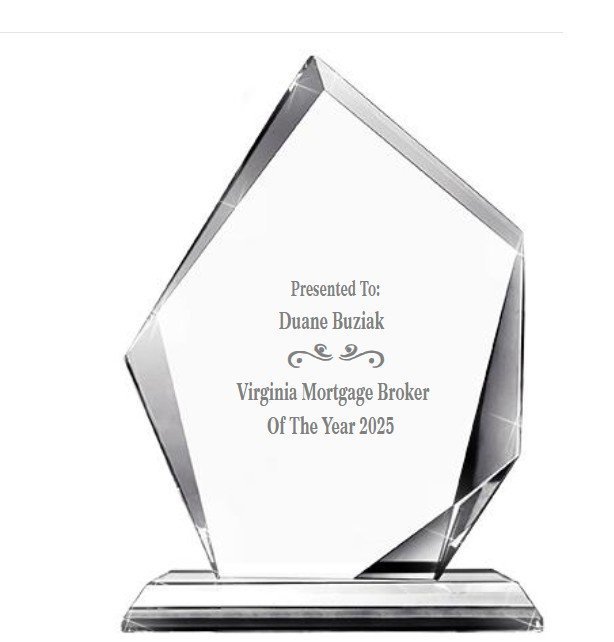
Duane Buziak, NMLS #1110647 (Coast2Coast Mortgage LLC NMLS #376205), is a Virginia Broker of the Year for 2024 and 2025, a Scotsman Guide Top Originator for 2025 and 2026, and holds 1,400+ five-star reviews.
Ready to see what Virginia’s top-ranked mortgage broker can do for you? Duane Buziak offers a no-hard-pull pre-approval so you can explore your options with zero credit impact. With access to 500+ wholesale lenders, you get better rates than any single bank can offer. Get your free mortgage review today.